
In today’s fast-paced digital environment, businesses generate an overwhelming amount of data every single day — contracts, invoices, proposals, reports, client files, and internal documentation. Without a clear system in place, these files quickly become disorganized, difficult to locate, and even vulnerable to loss. That’s where a well-designed folder structure becomes essential. A strategic folder structure is more than just creating folders and subfolders — it’s about building a logical, scalable framework that improves efficiency, strengthens collaboration, and supports long-term growth. In this article, we’ll explore folder structure best practices and how implementing them can transform the way your organization manages information.
Studies show that employees can waste up to half of their working time simply searching for information, retracing steps, or trying to locate files that are poorly labeled or buried in disorganized folders. Research from McKinsey & Company and Gartner reveals that knowledge workers spend a significant portion of their day — sometimes as much as 20–50% — on activities related to finding, sharing, and re-creating information. That lost time doesn’t just reduce productivity; it drives frustration, delays decision making, and increases the likelihood of mistakes.
A logical folder structure isn’t just a neat filing system — it’s an engine of productivity. By establishing a consistent, intuitive hierarchy for digital files, organizations empower employees to find what they need instantly, eliminate duplication, free up time for higher-value work, and improve team collaboration. In a world where data is exploding and every minute counts, folder structure isn’t a convenience — it’s a business advantage.
In today’s digital environment, file organization is no longer just an administrative task — it is a critical part of an effective IT strategy. As highlighted in the research mentioned above, employees can spend a significant portion of their workweek searching for information instead of performing productive tasks. For small businesses, this inefficiency translates directly into lost revenue. Depending on team size and average salaries, poor information management can cost companies thousands of dollars per employee each year in wasted time and duplicated effort.
This challenge is even greater for small businesses without a dedicated IT specialist. In many cases, the owner assumes the IT role while also managing operations, sales, and finances. Without a clear folder structure, files become scattered across devices, emails, and cloud platforms. Over time, disorganization compounds, slowing down workflows and increasing operational risk.
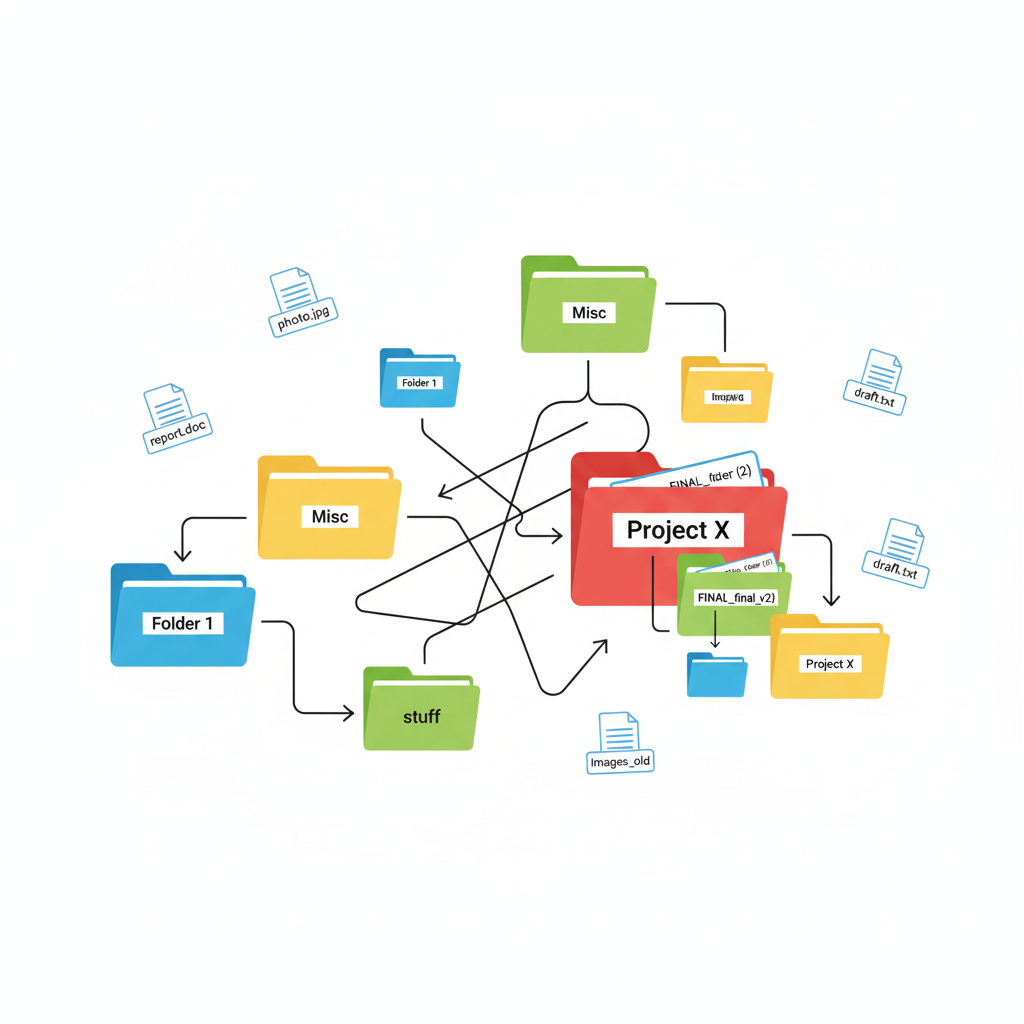
Poor file structure often leads to:
- Time wasted searching for documents
- Duplicate or outdated files are being used
- Delays in customer response
- Increased security and compliance risks
- Reduced team efficiency
For small businesses operating on tight margins, these hidden inefficiencies add up quickly. A structured, well-planned folder system is not just about keeping files tidy — it supports productivity, reduces risk, and creates a scalable foundation for growth. When aligned with a clear IT strategy, proper file organization becomes a cost-saving and performance-enhancing asset rather than an afterthought.
Conclusion
In the end, a well-designed folder structure is one of the simplest yet most powerful ways a business can improve efficiency and protect its bottom line. Disorganization quietly drains time, energy, and revenue, while a clear and consistent structure creates clarity, speed, and control. For small businesses — especially those without a dedicated IT specialist — implementing proper file organization can eliminate unnecessary frustration, reduce costly mistakes, and free up valuable hours each week.
By investing time in building a smart, scalable folder structure, business owners are not just organizing files — they are saving money, reducing operational strain, and creating space to focus on growth. In today’s competitive digital landscape, working smarter isn’t optional. It’s essential.